
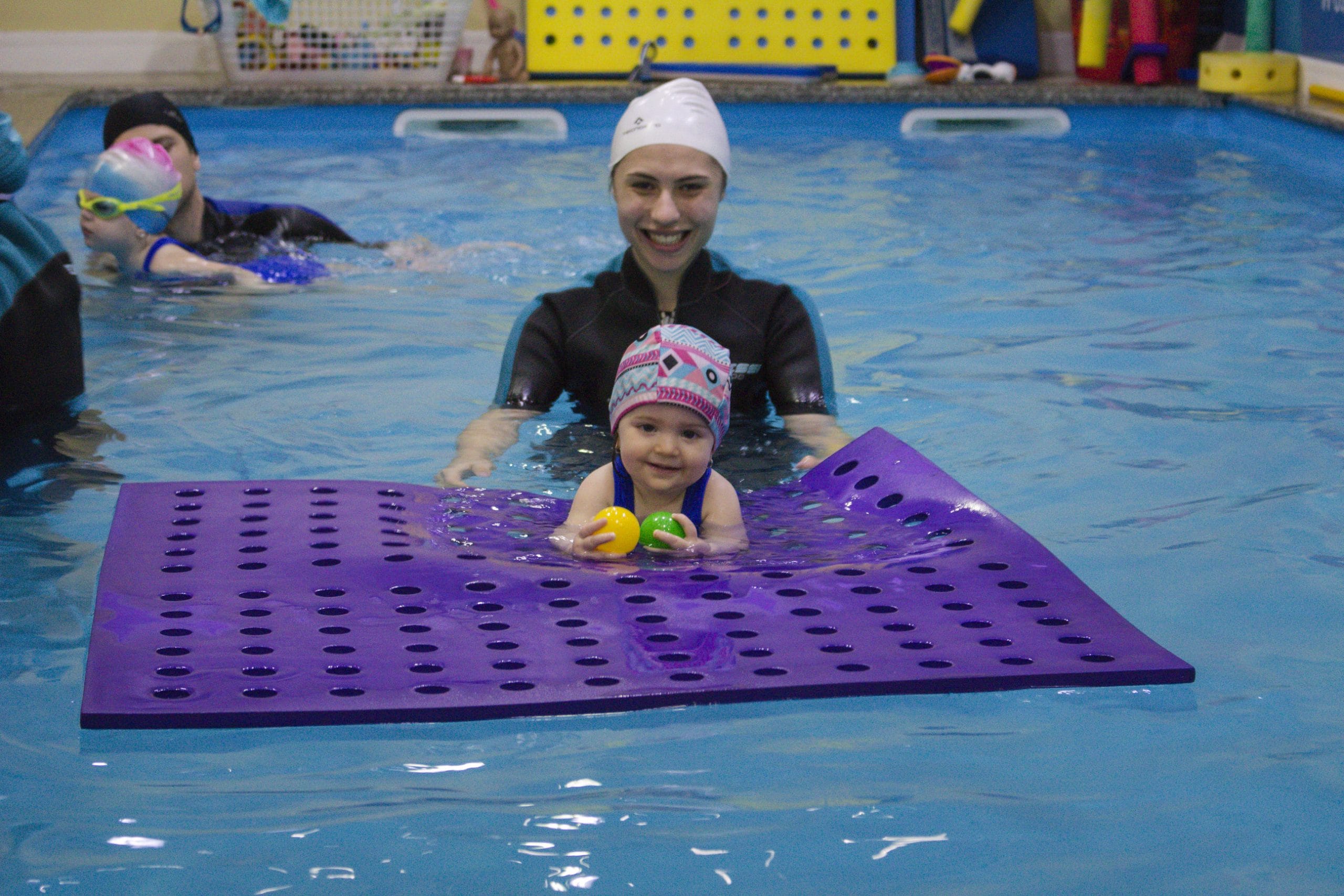
How to help your child overcome their fear of water?
Fear of water or aquaphobia is the most common phobia for which we go to a psychologist, even if zoophobia is the most common. The inability to do activities in the aquatic environment, or worse, not being able to help our child in case he falls into the water and is in danger, pushes us to overcome the instinct of conservation and start introductory swimming courses. In more serious cases, these must be preceded by several sessions with a psychologist. It is never too early to do this, as fears worsen over time and are more difficult to manage.
Do children have aquaphobia?
Fortunately, the answer is no. In the case of little ones, fears related to water are the result of secondary psychological processes. It could start around the age of 8-9 months, as a result of the awareness of separation from parents, which is why it is important that starting from that age you bathe with him, thus offering him security and comfort. Then, around the age of 2, he begins to be more aware of himself and his environment. This is the time when he sees certain situations that he does not understand and misinterprets. For example, he sees how the water is draining from the bathtub and thinks that he too can be pulled in there. Even if he is small, do not hesitate to give him complex information. At 3 years old, when the imagination becomes much more active, the child can imagine that there is a monster under the water that will hurt him. At this age, the imagination intertwines with reality and influences it.
All of the above situations, if not managed correctly and in a timely manner, cause the child to avoid contact with water, leading to aquaphobia.
What should I do if my child is afraid of water?
The most important step is not to underestimate their fear. Example: "I don't understand why you're so scared, after all, it's not that difficult." Also to be avoided are dramatizations like: "In the summer we're going to the beach, everyone will play in the water, only you will stay on the shore." I often encounter this kind of attitude from parents. It only increases the child's repulsion towards water.
Tracey Warren, national director and safety expert for Child Safe Canada says "don't force a child who really has a fear...take them back a step."
Point out all the benefits in a positive and empathetic tone (e.g., "I know it's hard for you, but we both know it's worth making this effort now, so that when we go to the pool, we can all play in the water.") This way, he will perceive the water as a friendly environment, not as a necessary evil.
If your child is afraid of water, but you decide to take them to swimming lessons, look for a pool dedicated to young children. In these, the instructors have, in addition to training in swimming, also studies in child psychology. Your child will be safe and will have visible results in a short time. Avoid very crowded pools, where children of different levels or even adults enter. The noise, splashes and agitation of others will amplify their state of anxiety.
If you decide to take matters into your own hands and solve the situation yourself, plan your steps carefully. Choosing the right time is very important. Most of the time, we tend to leave it for the evening, when we have finished the rest of the chores, so that a massage and a well-deserved sleep can follow. But at that moment, the child is already tired and all he wants to do is eat and rest. In the case of children who are afraid of water, the best time for a bath is when they are most in the mood to play. This way, they will be more receptive, more eager to participate in games and learn new things. It is equally important to have eaten a meal an hour before, preferably together. This way, you will both benefit from extra energy and patience and you can take advantage of the mealtime to plan the playtime during the splashing.
Read stories with and about water to them. You can start with „I'm Not Afraid of Water,” the first book about water education written in Romanian. It's a beautiful story for children and a valuable resource for parents, with doctors, psychologists, physical education teachers, and swimming coaches collaborating on its writing.
Other tips that might help you:
- Adjust the water in advance, this way you avoid contact with water that is too cold or too hot;
- Place a non-slip mat on the bottom of the bathtub to avoid imbalances;
- A mirror placed next to the bathtub will make baths much more fun. The child will have more fun seeing himself, for example, with tousled hair and full of foam;
- Put toys in the water that float, but also sink;
- Play by blowing into water held in your fist, then blowing on a toy on the surface of the water;
- Make "aquatic zoos" and recover "sunken treasures";
- Remind them of the heroes in the books they read and what they did in difficult times. You can improvise a role play;
- If you notice that he doesn't like it, avoid bathing him every day. You can do it every 2 or 3 days. This way he will accept it more easily;
- If he doesn't like the bathtub, you can try the shower. The opposite is also true.
- Be an example. Participate with him, have fun and play like a child. Whatever you suggest he do, do it first. Stay in touch with him all the time. All this will give him confidence and help him relax.
- Avoid rewards or threats of not getting something. Help him understand that playing in the water is the best reward for his effort.
- When he already enjoys the water to a small extent, get excited and participate with him in every proposal he has, whether it's a game, a different way of doing an exercise, or a new exercise.
Don't rush him, don't force him, don't force him. Push him from behind, but give him time and don't make him feel bad when something doesn't work out. Encourage him to try again and again until he succeeds.
Lower the level as much as necessary to be accessible and successful. Stay at that level until you feel like he's enjoying what he's doing and is ready to move on.
It will take patience and perseverance, but I trust you will succeed. In the end, your child will be happy and will thank you in his own way! Good luck!