Frequently asked questions

Why should I take my baby to aquatic education classes?

Taking your baby to swimming is recommended before the age of 6 months, when water is more easily accepted and the reflexes from birth are still present and can be stimulated, which will give him early acquisitions in the following periods (e.g.: walking on the balls of the feet, walking bipedally, first words, etc.).
 
Swimming in the first months of life has multiple benefits, both physically, emotionally and socially. Here are some of them:
 
1. **Muscle development and coordination**: Swimming helps strengthen muscles and develop motor coordination. Babies use almost all the muscles of their body when swimming, which contributes to balanced physical development.
 
2. **Stimulates the Cardiovascular System**: Swimming is an excellent exercise for the heart and lungs. From a young age, babies can begin to develop healthy cardiovascular endurance.
 
3. **Improving sleep**: Intense physical activity, such as swimming, can help babies sleep better and have deeper sleep.
 
4. **Increases water confidence**: Swimming from a young age can reduce fear of water, making children more comfortable and confident in the water as they grow.
 
5. **Social Interaction**: Baby swimming lessons provide the opportunity to interact with other children and families, which can help with early social development.
 
6. **Stimulate cognitive development**: Rhythmic movements and sensory experiences in water can stimulate the brain and contribute to cognitive development.
 
7. **Safety**: Early familiarization with water can help prevent water-related accidents as the child learns to react appropriately in aquatic environments.

Why should I choose Acvatic Bebe Club?

Choosing a particular baby swim club is an important decision, as it can significantly influence your child's experience and safety.
 
In ABC clubs, water treatment is done through a mixed system of electrolysis and UV rays with a direct effect on the quality and purity of the water, which in this way becomes salty (like sea water), has a minimum temperature of 32.5 degrees, regardless of the season and a depth of comfort for little ones (who tend to have more confidence if they feel the pool floor from the first sessions).
 
 
Water analyses are performed 3 times a day internally, and 2 times a month by an independent laboratory, authorized by the Bucharest Public Health Directorate, and at the request of parents, the reception can present the laboratory results of the latest water reports.
 
Within the ABC Decebal club, we have a full-time nurse employed, who can provide support and counseling, if needed and at the request of parents.
 
 
All Acvatic Bebe Club specialists have a first aid course completed upon hiring and subsequently updated annually.
 
Our specialists, through their professional training (graduates of the Faculty of Physical Education and Sports, Physiotherapy or Masters of Performance Sports), but also through their personal qualities, apply learning methods through play, so that children have fun while acquiring essential skills.
 
 
The individual aquatic specialist-child program allows through ABC METHOD  personalizing each session according to the child's availability and own pace of development, the elements being structured in the form of games, coordination exercises and sensory stimulation.
 
 
The atmosphere within the ABC clubs is warm, friendly, playful, with attention to the needs of the little ones and the comfort of the parents: changing rooms equipped with changing tables and baby bathtubs, acclimatization room for thermal transition, free parking (at ABC Decebal).
 
The club schedule is Monday to Friday from 9 am to 9 pm, and Saturday and Sunday from 9 am to 3 pm. Upon request and depending on the availability of the schedule, we can also offer personalized time slots (e.g. from 8.20 am to 9 am; possibility of holding 2 consecutive sessions 9 am to 10.20 am, etc.)
 
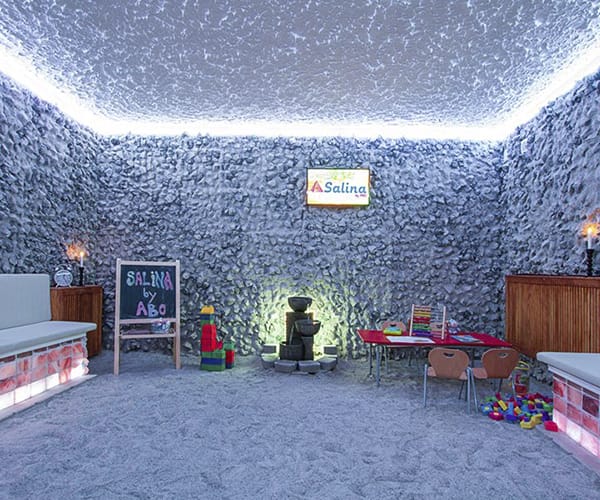
In addition to aquatic education activities, you can sign up and participate in workshops with various themes for parents and children of all ages (theater, educational workshops, etc.) that take place on the premises. SALT ALC or relax with the help of jade and tourmaline therapy -both services being present at ABC Decebal.

How long are the sessions at Acvatic Bebe Club?

Each aquatic education session is incorporated into a total 65-minute premium experience at Acvatic Bebe Club Primăverii and Decebal , which includes feedback and communication between parent and ABC swim specialist about your little one's condition and progress, socialization and relaxation for your baby in the company of new friends and 80’ Ultra Premium at Acvatic Bebe Club Dorobanți, which additionally offers you baby massage included in every session and a pool dedicated to just one baby and his aquatic specialist for the duration of the entire water session.
Sessions for babies aged between 1 and 48 months last a maximum of 40 minutes and are tailored to the pace and availability of each child.
Sessions for children aged 4 to 6 last a maximum of 45 minutes and are designed to align with each child's pace and availability.

How many times a week would it be advisable to take our little one to the baby swimming pool?

The ideal frequency of bringing your baby to the pool depends on a number of factors, including age, health, your baby's reaction to swimming and your goals. On average, parents opt for 1-2 appointments per week (2 is particularly recommended from 1 to 8 months).
 
 
Regular sessions (whether you choose 1 or 2 per week), without long breaks in between are recommended to strengthen swimming skills and motor coordination, contributing to its progress in a healthy way.
 
 
As they get older (4 years and up), when they can be involved in other stimulating activities, the parent should pay attention to the child's reactions and adjust the frequency according to the child's comfort and enjoyment of swimming.

What equipment is needed for the swimming session?

The necessary equipment consists of:
- swimming helmet
- special water diapers, for children up to 3 years old
- briefs/swimsuit (regardless of age)
- towel/bathrobe for children traveling alone
- shower gel, shampoo, body lotions, ear buds.
 
Accompanying adult equipment (if entering the class teaching area):
- swimsuit
- bathrobe
- pool slippers
- swimming helmet

What happens if the baby starts crying?

Usually, babies respond positively to water, but the reasons for crying can be multiple (they are tired, hungry, bothered by noise, have abdominal cramps, have inflamed gums, show separation anxiety, etc.), therefore the aquatic specialist, together with the parent, will need to identify the source of discomfort.
 
It is important to keep in mind that the aquatic environment is a learning context. Beyond the motor skills it stimulates, water training requires patience, tolerance, and attention from the little ones.
 
Learning is not an easy process and, like any process, it takes time for skills to develop, which can be demanding and even frustrating for some children. Some children have a low tolerance for frustration, so they may start crying, aiming to abandon the task.
 
Part of the aquatic education process is increasing frustration tolerance, and our specialists are trained to deal with these moments, with games, moments of rest and relaxation, during which the baby is positively stimulated, and crying is replaced with a good mood.
 
Empathy, patience, cooperation between the child, aquatic specialist and parent are essential for overcoming these moments of frustration.

If my baby gets water in his ear, is there a risk of infection?

A possible infection can occur in the outer ear (also known as swimmer's ear) only if the water remaining in the ear canal has not been wiped away, which allows bacteria to act.
 
You can gently tilt your baby's head to either side at the end of the session to allow the water to drain naturally, or you can ask your nurse or club specialists to properly clean the ear canal with a soft towel to avoid this risk. Using ear buds can help push the water or wax deeper into the ear canal.
 
 
It is also important that the baby swims in clean and properly maintained water, whether it is a pool or a bathtub, as contaminated water can increase the risk of infection.
In the case of inner ear infection, studies have shown that there is no link between this type of infection and swimming.

When does a baby learn to swim?

Babies can develop basic skills and comfort in the water from the first months of life, but traditional swimming and practicing specific swimming techniques occurs around the age of 4-5. Regular exposure to water through short and frequent sessions helps develop a baby's confidence and comfort in the water.
 
The first independent aquatic movements over a short distance (4-5 meters), as well as the first assisted jumps, are possible around the age of 18-24 months.

Are there differences between starting swimming lessons in winter versus summer?

It is important that the start of the program is not conditioned by the weather outside, temperature changes and climatic factors can actually contribute significantly to strengthening the immune system.
 
Swimming is the only activity in the cold season where the child socializes and develops psychomotor skills, where they do not risk getting sick, being in a safe environment under the strict supervision and guidance of specialized and experienced personnel in the field.

Why is it important to have continuity in the aquatic education program?

After a longer break, children may lose learned skills because they lack muscle memory.
 
The positive results and gains achieved through a consistent program are more evident and last longer.
 
The acclimatization process and the ABC teaching method allow courses to be held regardless of the season.

Do you offer the possibility of recovering missed sessions?

Yes, we offer the possibility of making up for missed sessions within the standard validity period, if the absence is announced in writing to the club reception at least 24 hours before the scheduled time. 
 
If the absence is not announced at least 24 hours in advance, the session can be recovered only once as follows:

  • By paying a rescheduling fee of 150 lei and sending proof of payment within 48 hours of the absence.
  • Or by sending a medical opinion/medical report stating the reason for the child's absence and the period required for recovery.

CAREFUL! 
- We cannot guarantee the availability of the in-house aquatic specialist for the recovery session. 

- A rescheduled session that is subsequently missed is considered completed.  
- Rescheduling is done depending on the type of subscription and only during the standard validity period. 
 VERY IMPORTANT! 

The session is not made up and is considered completed if the child did not show up, the parent did not notify 24 hours in advance, a medical certificate was not submitted within 24 hours, or proof of payment was not sent within 48 hours of the absence.

What does the subscription validity period mean?

The subscription validity period is the interval during which the included sessions can be performed. There are three types of validity: 
 
a) STANDARD validity:

  • 4-session subscription: 5 consecutive calendar weeks from the first session. Guarantees you to keep your preferred time slot. 
  • 12-session subscription: 13 consecutive calendar weeks from the first session. Guarantees you to keep your preferred time slot. 
  • Genesis or Aquatic Gymnastics Session: valid for 30 days from purchase – can be scheduled only once. 
     
    b) NON-STANDARD validity: 
  • It comes into effect after the standard validity period expires. 
  • Outstanding sessions can be rescheduled within 12 weeks, one per week, with no guarantees regarding the instructor or original schedule. 

  • A session PLANNED and absent in THE validity non-standard (from any reason) is CONSIDERS carried out! 

c) EXTENDED STANDARD validity:

The standard validity, which guarantees the retention of the preferred time slot, can be extended by: 
  • 7 consecutive days – based on a payment of 5% of the subscription value 
  • 14 consecutive days – based on a payment of 10% of the subscription value 
 

- The extension request must be submitted in writing (by email or WhatsApp) at least 48 hours before expiration. 
- Payment confirmation must be sent by the last day of validity. 

- A scheduled and missed session within the extended standard validity (for any reason) is considered completed! 
 
Important note: The validity period is NOT extended in case of seasonal viruses or colds. The validity period of the subscription determines the interval in which the included sessions can be performed.  

How can I recover sessions that were not performed outside the validity period?

Sessions not performed within the standard validity period become outstanding sessions and can be recovered within the non-standard validity, as follows: 

  • The non-standard validity period begins immediately after the standard validity period of the subscription expires and lasts for 12 consecutive weeks.
  • During this period, outstanding sessions can only be rescheduled one per week, depending on availability, with no guarantee of keeping the same time slot or instructor.
  • Scheduling is done exclusively through a written request (email, message or WhatsApp), at least 48 hours before the desired time. 
  • If you wish to keep the same time slot from the standard validity period, the remaining sessions can be carried over to a new subscription or performed in an extended standard validity, only if payment is made within 48 hours of the standard validity expiration. 

Can the validity of the subscription be frozen in case of viruses?

This option is not available within Acvatic Bebe Club clubs, as there are several types of validity that allow for efficient management of included sessions. 

 
We recommend, depending on schedule availability, to make appointments twice a week during periods when the child is healthy, to support the continuity of the sessions.

What is a "recoverable" session and what is a "remaining" session?

  • Recoverable session: an absent session justified by a medical certificate sent to the reception within 24 hours of the absence. It can be rescheduled only once during the validity period of the current subscription. 
  • Outstanding session: a session not performed during the standard validity period, which can be rescheduled in the non-standard validity, without keeping the original time slot. 

What happens if my child's registered aquatic specialist is not available?

session will be support by another specialist from team Aquatic Baby Club. In this case, if not WANTS another specialist, session not maybe be Undone or rescheduled. 

In what cases can the aquatic specialist be changed?

The ABC specialist can be changed at the parent's request within the limits of the availability of the other instructors.

Can aquatic education sessions be taught in other international languages?

ABC specialists are prepared to support aquatic education sessions in the following languages: English, French, Ukrainian or Russian.

Can the parent enter the pool?

The sessions are individual 1-1, the parent assists from outside the pool, except in the case where the ABC specialist considers that the parent's presence is necessary to easily achieve the transfer of trust. In this case, the club will request from the parent a medical certificate attesting to the state of clinical health, and in the case of ladies, a vaginal secretion analysis.

What preparations are necessary before an aquatic education session?

It is recommended that the child's swimming session be scheduled taking into account sleep and meal times - do not eat with the child an hour before the start of the activities. The little one's luggage should not be missing: water diapers, swimsuit or briefs, shower gel, towel.
 
It would also be useful to talk to your baby in as much detail as possible about the experience he is about to have: that he will be staying with you with an aquatic specialist during the swimming session, that he will meet other children, etc.
 
You can use illustrated books, cartoons, or stories about swimming during the evening bath.

Why do some babies cry during aquatic education sessions?

Usually, babies respond positively to water, but the reasons for crying can be multiple (they are tired, hungry, bothered by noise, have abdominal cramps, have inflamed gums, show separation anxiety, etc.), therefore the ABC specialist, together with the parent, will identify if there is a source of discomfort for the little one.
 
It is important to keep in mind that the aquatic environment is a learning context. Beyond the motor skills it stimulates, water training requires patience, tolerance and attention from the little ones, which can be demanding and even frustrating for some children who have a low tolerance for frustration, so they may start crying, aiming to abandon the task.
 
Empathy, patience, cooperation between the child, instructor and parent are essential for overcoming these moments of frustration, so dear parent, it is good to be calm, so that you can offer the child the support he needs. Favorite toys can provide a sense of familiarity and comfort during the lesson, which is why we encourage you to come accompanied by such a toy.
 
Part of the aquatic education process is increasing frustration tolerance, and our specialists are trained to deal with these moments, with games, moments of rest and relaxation, during which the baby is positively stimulated, and crying is replaced with a good mood.

How can I give aquatic education sessions as a gift in the ABC universe?

Our club offers the possibility of purchasing a gift voucher for aquatic education and salt therapy sessions. This voucher can be ordered online or by phone and can be sent by email or picked up at the club reception. Discover our online store: https://acvaticbebeclub.ro/shop

What is the difference between aquatic gymnastics and aquatic education?

Both activities are valuable and contribute to the health and development of the little ones, but they have different objectives and techniques, adapted to the specific needs and abilities of each baby. Aquatic education is the activity through which the little one develops aquatic movements that help him develop on all levels, both physical and cognitive, without pressure, at the pace of each one and has as its objectives the development of confidence in the aquatic environment and the development of a positive relationship with it, as well as the practice of survival skills in the event of an accidental fall into the aquatic environment (breath control, floating, etc.).
 
Aquatic education involves games, activities guided by a specialist and a teaching method (ABC METHOD) designed to make babies feel safe and happy in the water.
 
Aquatic gymnastics is recommended for babies who need movement to effectively improve their physical condition and is oriented towards exercises with a positive impact on increasing muscle tone, cardiovascular endurance and improving flexibility and balance. It is dedicated to children who have locomotor or neuro-locomotor difficulties because they can be corrected easily and effectively. Water is a favorable environment and offers little resistance and does not put pressure on the child's body when engaged in movement.
 

If I have 2 children, can I get a discount?

Sure, for the 2nd child you benefit from a 5% discount when purchasing a subscription.

Is it okay to skip aquatic education sessions if the baby is crying?
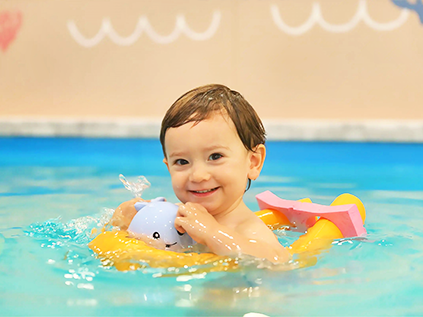
Giving up swimming is not necessary, but it is important to adjust your expectations and be flexible. With patience and perseverance, most babies adapt and come to enjoy swimming sessions and eagerly await their next appointments with our specialists. To help them feel more comfortable, you can follow a few considerations:
 
1. Request an appointment with another aquatic specialist (sometimes babies respond positively to being with a person of a certain gender)
 
2. Create positive associations and help yourself in this process with illustrations from a book in which there are children swimming (we can recommend this in this regard) the book "I'm not afraid of water" , short videos or toys that can be used in the water with the invitation to use them at the next aquatic education session.
 
3. We encourage you to have constant communication with the ABC specialist who can provide you with personalized advice adapted to the specific needs of your baby (e.g. you can start the swimming session by spending a few moments together at the pool access stairs or entering the water as emotional support for the little one).
 
By applying these tips, the aquatic education session can become a more enjoyable and relaxing experience for both baby and parent.

ABC Blog

Benefits of swimming, studies and examples of activities that make children water-friendly.
Salina by ABC

Salt therapy is a complementary method of prevention and treatment for respiratory diseases, with proven benefits on immunity.
Media gallery

Dear mom, we invite you to schedule a visit online to Acvatic Bebe Club locations.You can easily find out all the information you need before we call you.You now just choose the day and time.

dolphin+seal helmet-04
Discover the first book about aquatic education in Romania!