How do we prevent and overcome the fear of water?
“What is swimming? First of all, it means safety in the water. If you haven’t learned the movements and breathing techniques, it’s normal to feel unsafe. Safety gives you control over your emotions and eliminates the feeling of panic, so you need to focus on that. Once you feel safe, you can easily learn to swim because you’re no longer concerned with the survival aspect.” – Melon Dash, “Conquer Your Fear of Water: An Innovative Self-Discovery Course in Swimming”
Babies are not born with a fear of water, just as they are not born with a fear of fire…but the parents' fear expressed non-verbally or verbally, "stay away from the water", "don't go near the water", "get out of there, you're not safe" and unpleasant experiences in or with water, can give rise to this feeling.
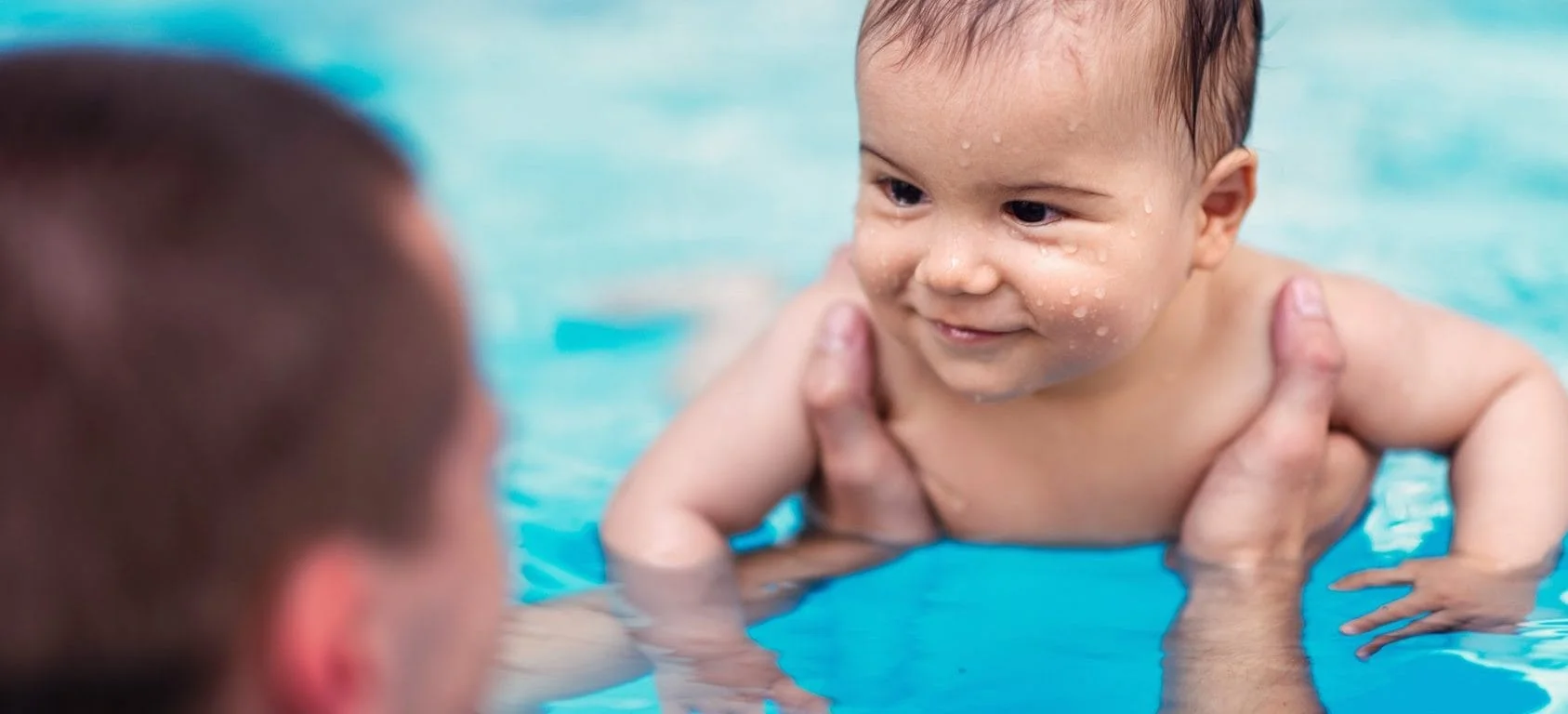
As parents, from the age of a few months, we have the choice between giving them the chance to learn how to love and protect their lives in the water or instilling in them a permanent fear of it.
What would you choose for your baby?
Contact with water from a young age
Therefore, it is important to accustom babies to water by taking them to the sea and/or swimming lessons before they reach the age of 2, which is the period when their imagination develops. It is our duty, as parents, to ensure that their imagination takes shape constructively, that they are safe in the aquatic environment, that they have harmonious development, and that their emotional intelligence is stimulated. Often, the fear of the unknown can take ugly forms, which is true for anyone, regardless of age.
Association with positive experiences
By learning to swim from the first years of life, through play and fun, we ensure the child's safety in the aquatic environment and their emotional development in the future. Gradually, the little one will gain courage and will always associate swimming with other positive experiences. (the fact that he has achieved something through his own efforts, the fact that he has socialized, etc.) Of course, a child should never be left in the pool or in the sea without being supervised by an adult. You can motivate the baby by offering him small "prizes" for his successes in the aquatic environment.
Professional guidance
In general, the explanations for our fears are found in the early part of life, say specialists, and the mission of Acvatic Bebe Club is to demonstrate to the little ones the beauty of swimming as well as the accumulation of completely new experiences, as long as they take place in a place that offers complete safety. Through a constant POSITIVE and personalized approach from an individual instructor, within dedicated centers, with qualified staff, in a safe and controlled environment (regardless of the season), with facilities expressly designed for babies, parents can be assured that the little one:
will benefit from swimming sessions always adapted to their own pace of progress and their state of comfort;
-will develop a strong and harmonious body;
-will improve their balance, coordination and spatial-temporal orientation, acquisitions that will contribute to their motor independence and the emergence of walking earlier;
-will gain increased immunity;
-will enjoy early socialization with a positive impact on separation anxiety, once they enter the community (kindergarten, school) and manifest the desire for socio-affective independence;
-will increase their learning ability and confidence in their own strengths with the help of demonstration games, rehearsal, appreciation and encouragement of successes.
Give your little one a gift for life! Schedule the first aquatic education session at ABC and kick-start your child's harmonious development.
Sources of inspiration:
https://www.realitatea.net/teama-de-apa-cum-explica-psihologii-ablutofobia_1749961.html
https://www.modernmom.com/6f8425e0-3b45-11e3-8407-bc764e04a41e.html
https://books.google.ro/books/about/Conquer_Your_Fear_of_Water.html?id=tbNBUeq4V6UC&redir_esc=y

