Swimming and proper nasal hygiene prevent colds and ear infections in children
There is a myth that circulates unaltered among parents everywhere, that swimming, especially in the cold season, can lead to colds or ear infections in children. Our goal in this article is to dissect and debunk it with information supported by studies and doctors.
About the nose and its role in respiratory system health
The nose, more precisely its mucosa, is the first line of defense of the respiratory tract against allergens, bacteria and polluting particles. The mucociliary layer actively participates in respiratory homeostasis using protective mechanisms such as nasal cilia, mucus secretion and the release of mediators in response to dangerous stimuli coming from the outside.
What happens when a threat arises?
Dangerous particles are retained by the mucus and the action of the cilia pushes the layer of mucus that has captured the "enemies" towards the pharynx, where it is swallowed, thus providing an effective cleaning of the nasal cavity. When this well-developed transport system of the body is altered, the result can be an inflammatory process that leads to the damage of the entire nasosinusal mucosa, which thickens the mucus, making it difficult to eliminate it and stimulating the growth of bacteria.
Therefore, a healthy nasal mucosa is essential for respiratory health and numerous studies have shown that proper nasal hygiene can prevent respiratory diseases and viral or bacterial infections, such as flu, colds, sinusitis, rhinitis, stuffy nose or otitis media.
What is proper nasal hygiene in children?
Specialists recommend that nasal hygiene in children be done naturally, at any time during the day, but preferably in the morning and evening, maintaining the natural humidity of the nasal mucosa with isotonic saline solutions. These saline solutions favor the cleaning of nasal cilia and reduce or prevent congestion of the nasal mucosa, thus facilitating the natural cleaning of the sinuses. But the most important detail, before providing support to the nasal mucosa, is to teach children to blow their nose well. In this way, we avoid sending the already existing secretions, which can be loaded with unfriendly elements, to the sinuses. Don't forget! The mucus that captures these elements is swallowed when the system is healthy, it is not taken to the sinus cavities and ears, as happens when we are faced with inflammation.
The benefits of nasal hygiene
- Removes thick and persistent mucus, reducing nasal congestion
- Clears sinuses
- Removes allergens, irritants and dangerous contaminants
- Prevents and treats acute or viral sinusitis
- Prevents ear infections, colds and flu or shortens their duration
- Reduces symptoms of respiratory infections, such as cough, stuffy nose or snot
- Supports respiratory health
About how the nose and swimming make a good team in preventing respiratory diseases
We have learned so far that it is very important to support nasal health with proper hygiene. And, you are probably wondering, but doesn't swimming pose a threat in this regard? How can it be a good team to prevent otitis, for example, when we expose our nose and ears to pool water?
" The water must enter the ear, to clean the ear. The water can easily pass through the duct and is easily cleaned of dust. But, if the water is cold, in the basin it becomes dangerous. It is important that the water in the basin has a temperature of over 30 degrees and the room where the basin is located must have a temperature of over 30 degrees. So, if the water that enters the ear is warm, it does not pose any danger. But it is very important that, when we get out of the pool, in addition to warming up our body and head skin well, we wash our nose. Because you make secretions from the moisture and, if you don't remove the snot, it goes to the back, nose and ear and leads to otitis media. Therefore, I advise parents to teach children to blow their nose when they get out of the pool.", says Dr. Ana-Maria Postol, ENT specialist at the show "Neatza with Răzvan and Dani".
And here we come back to an important detail: blowing your nose, followed by its hygiene.
Follow the advice of Dr. Ana-Maria Apostol – ENT Physician HERE
But how does swimming help?
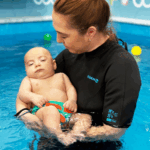
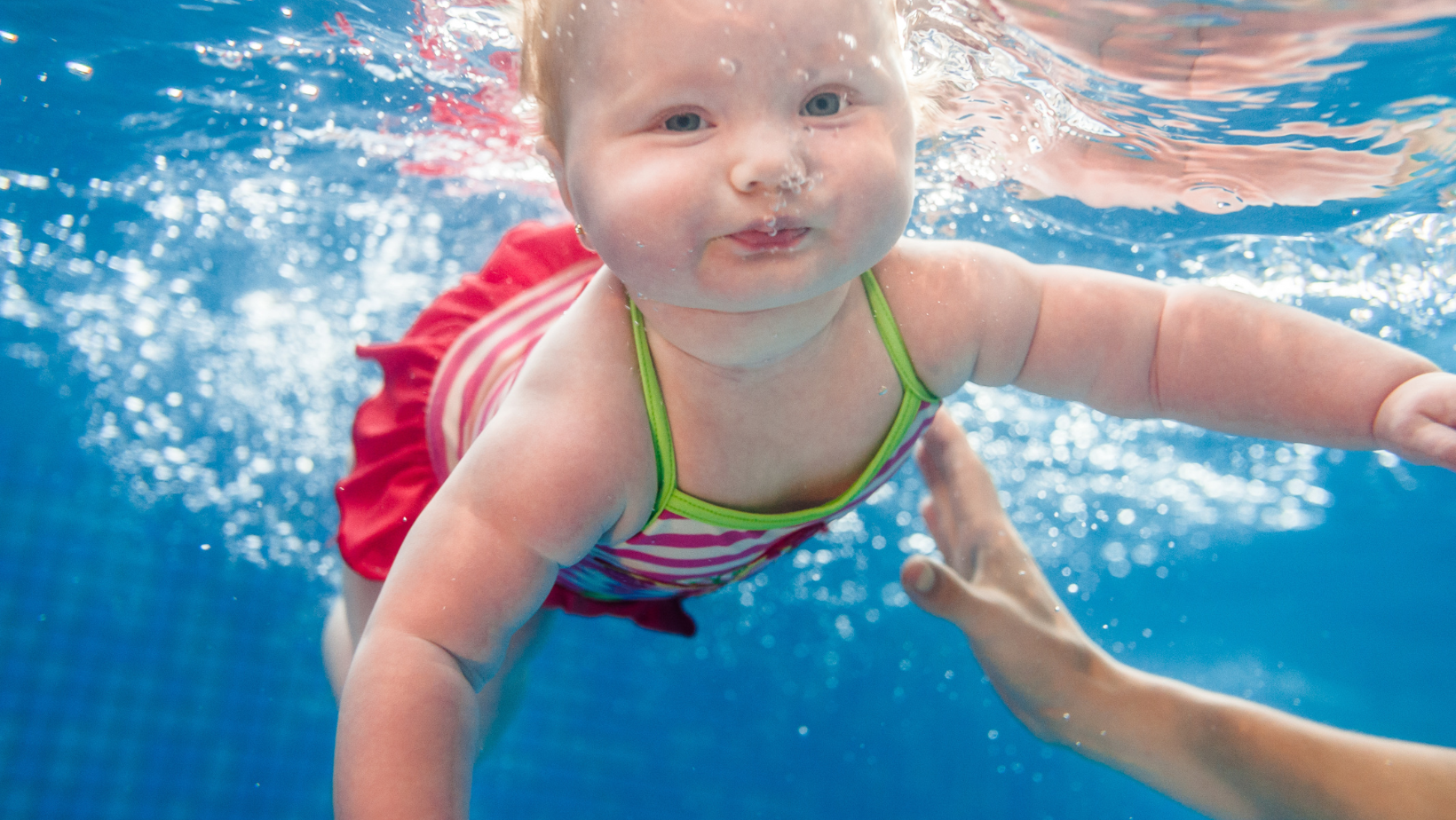
Well, at Acvatic Bebe Club, in addition to the fact that the water temperature and that of the room where the pool is located are over 30 degrees, which provides preventive safety in any season, we also offer children, from a very young age, this extremely healthy habit: nose blowingWe teach them how to make bubbles in water by exhaling through their nose, so that they get used to it and nose blowing becomes something natural.
Moreover, studies have shown that the humid air of swimming pool rooms offers protection to the nasal passages and prevents the mucous membrane from drying out. Swimming, especially in the water of our pools, where its disinfection is done through a mixed system of saline electrolysis, ozone and UV rays with a direct effect on quality and purity, keeps the child's airways open, providing better oxygenation, but also an effective cleaning of the airways. Therefore, it is recommended by specialists that after swimming time, the child should blow his nose well, then clean it with a nasal spray with sea water.
And, because the nose is now clean and ready to absorb the benefits of aerosols, it's time for a session at SalinabyABC.
Thus, we not only prevent the occurrence of any ENT disease, but also support the health of the ear, nose, throat, upper respiratory tract, and sinuses.
source
https://www.sciencedirect.com/science/article/abs/pii/S0301054620300264
https://www.mdpi.com/2077-0383/8/1/64
https://cdn.gn1.link/iapo/manuals/viii_manual_en_21.pdf
https://www.tandfonline.com/doi/abs/10.1080/00016480410017657
https://www.liebertpub.com/doi/abs/10.1089/act.2010.16302?journalCode=act