
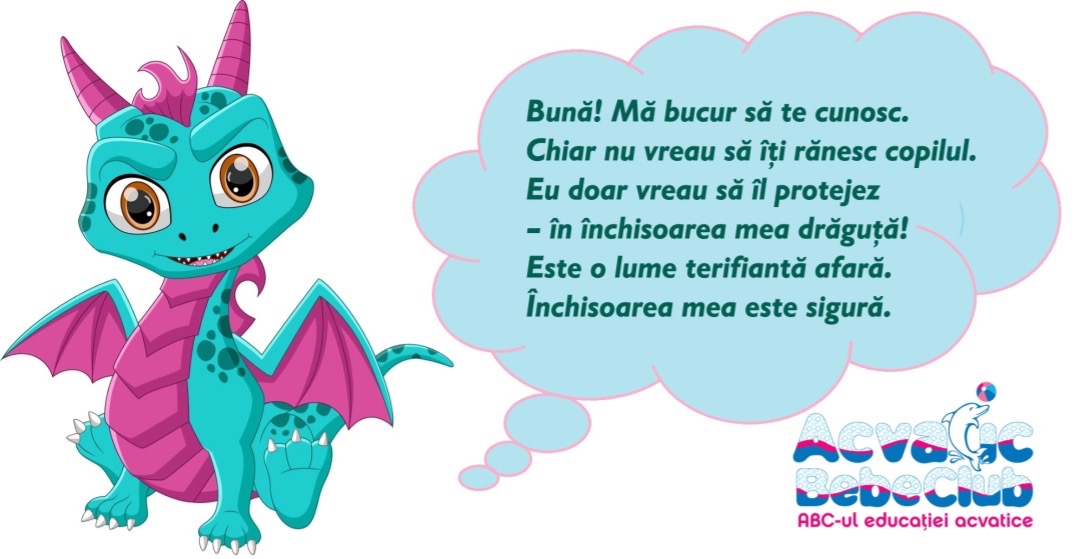
Who is the Dragon of Anxiety?
"Mommy, there's a dragon under the bed.!”. You don’t see it, you don’t hear it, but you feel it, because you notice how your child’s emotional balance is shaking. This dragon doesn’t attack, it doesn’t spit flames, but it holds your child prisoner and its only power is to produce strong negative emotions. The dragon’s name is ANXIETY and our role, as parents, is not to teach your child how to fight it, but to befriend it. Because the Dragon is part of life, it is the representation of all the challenges that will be part of the emotional development of your child, the adult of tomorrow. And we ask you now, how would you like the adult of tomorrow to be? Anxious and fearful or full of courage and balanced? Your answer to this question leads to the information you have below, which will clarify what you need to do so that your child’s anxiety becomes a friendly Dragon and his well-being becomes a constant.
What is anxiety?
Let's start by better understanding what anxiety is. Because we often completely confuse it with fear. The latter is the emotion that your child feels when an immediate and real danger threatens him. For example, when he climbs a tree and his foot slips. That is fear. When the child refuses to climb the tree for fear of getting hurt, then it is anxiety. Fear is when his sibling scares him by coming out from under the bed. Anxiety is when the child refuses to sleep in his bed because there is a dragon there. Anxiety is a strong emotion that causes your child to worry so much about what could happen to him that he can no longer lead a normal life and also causes physical effects, such as palpitations, insomnia, severe migraines, stomach pain and even fever and vomiting.
Anxiety is, in fact, a false alarm of danger, which produces a cascade of anxious emotions, dark thoughts and exaggerated behaviors. The alarm is given in the amygdala, in the midbrain, the most primitive part of the human brain. When the alarm is given, the child's entire brain becomes alert and tries to resolve the danger and when it sees that there is no dragon under the bed, it begins to put into operation the immense power of imagination. In fact, the primitive fear meets the superdeveloped gray matter of the brain and transforms it, when the child is 3-4 years old and understands the principle of cause and effect, into anxiety through the infinite power of imagination.
Thus, the Dragon becomes a master of disguise and is difficult to recognize. It may be the child's fear of water, spiders, the dark, the front door or what is hiding under the bed. The Dragon holds the child prisoner and tells him that if you don't stay here, with me, if you leave my side, bad things will happen to you. My prison is safe. The child's need for attention also becomes part of the Dragon, who shows his attention by scaring him and, automatically, bringing him into the arms of the one who protects him. However, this Dragon also has weaknesses. If the little one is focused on his commands, then he will be under his control. If he finds things to do that draw his attention away from the Dragon and his nasty tricks, then he will no longer be able to scare him. But we'll talk about that a little later. Now that we have defined anxiety in children, it is time to identify it and make a symptomatic portrait of the Dragon.
Anxiety symptoms: how to recognize them in your child
As I was saying, the Dragon is a master of disguise and hides best not necessarily in fears, but especially in physical and psychological symptoms. Diagnosing anxiety in a child is a real game of hide and seek, a game in which even the most trained specialists can fail. Our Dragon knows how to camouflage itself. And it takes a very good sense of observation, a lot of love and patience, and information for parents, grandparents, and all those close to the child to discover where it is hidden. The rule we must always remember is that anxiety becomes visible and pathological when it interferes with the child's normal life. For example, it is normal for a child to be afraid of spiders, but it is not normal for him to refuse to leave the house because he may be attacked by spiders.
The most common symptoms of anxiety in children are:
- Excessive sweating;
- Rapid heartbeat;
- Muscle tension.
But in children, anxiety becomes more aggressive, as they do not have the mental capacity to control it, and then physical symptoms also appear, such as:
- Stomach pain, nausea or even constipation;
- Migraines, dizziness or even fainting;
- Lack of appetite;
- Respiratory problems.
But also psychological symptoms such as:
- Nightmares and insomnia
- The obsessive need to always be in the presence of a close adult
- Excessive shyness or, conversely, becoming extremely vocal or even aggressive;
- Lack of interest in things and activities that previously gave him pleasure.
An example that identifies such a symptom is shyness. A normal child, when meeting a new person, is shy and shows this by avoiding eye contact, turning his head away, but remaining calm and smiling. However, a child who has the beginnings of anxiety will begin to struggle, cry and even run away from that person, as a kind of escape. Studies have shown that such shyness, which specialists call "negative", increases the risk that a child will develop social anxiety as he grows up.
Specialists have created a list to help you identify the Dragon holding your child captive:
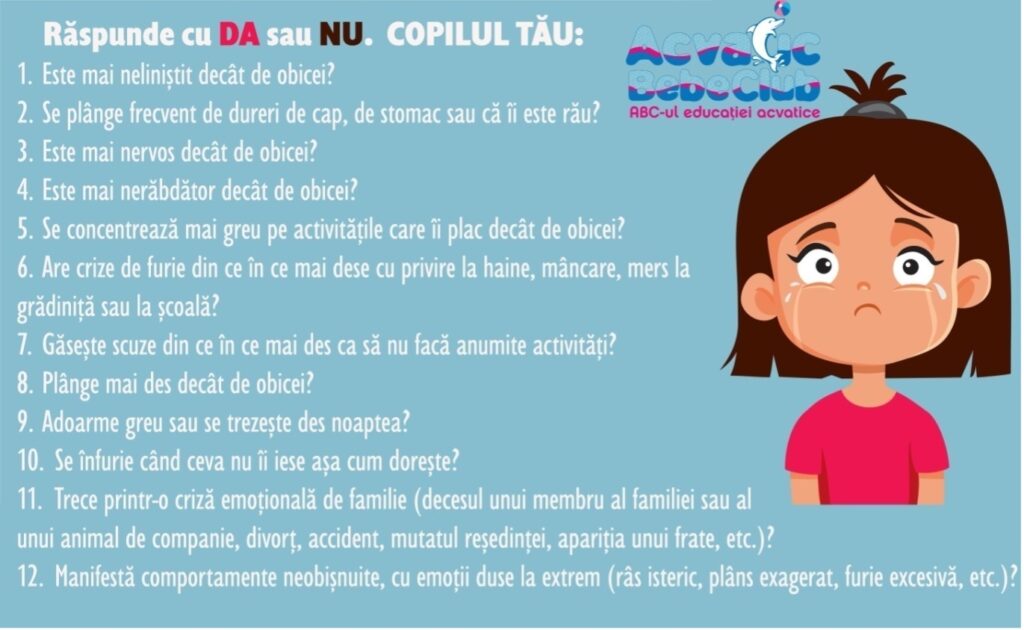
How many times did you answer YES to the above questions? If you counted more than 5 affirmative answers, then it's time to be on the alert. It's very possible that something is wrong and then it's advisable to pay attention to your child's emotional needs, more than usual, and, above all, to turn to a specialist.
Is anxiety curable?
YES. Anxiety is under control. Anxiety is a condition of anticipation. It is a malignant tumor of the "What would happen if...". And it is cured by gentle but persistent treatment of "What is now, here?". The Dragon does not liquidate itself, but rather frees us. Anxiety must be confronted every time it appears. But this should not be perceived as a Herculean struggle, but rather as a dialogue with the fears gathered in this Dragon that we have personified in our story. 90% of the emotional and physical pain associated with anxiety occurs before exposure to the situation that causes it. And after the child faces this moment and gets over it (a matter of a few seconds sometimes), he will almost immediately feel fulfillment and increased self-esteem. Basically, he will gain the strength necessary to tame his Dragon. We will find out in the next episode what are the most effective methods for taming the Dragon.
Bibliography
- https://www.scribd.com/book/264131850/The-Anxiety-Cure-for-Kids-A-Guide-for-Parents-and-Children-Second-Edition
- https://www.scribd.com/book/294373041/Anxiety-Panicking-about-Panic
- https://www.scribd.com/book/403995114/Anxious-Kids-Anxious-Parents-7-Ways-to-Stop-the-Worry-Cycle-and-Raise-Courageous-and-Independent-Children
- https://www.scribd.com/book/432045516/The-Busy-Parent-s-Guide-to-Managing-Anxiety-in-Children-and-Teens-The-Parental-Intelligence-Way-Quick-Reads-for-Powerful-Solutions
- https://www.scribd.com/book/470110313/Anxiety-Workbook-For-Kids-Proven-Tools-To-Cure-Your-Kids-Paralyzing-Fear
- https://www.scribd.com/article/449136347/Anxious-Kids
- https://www.tandfonline.com/doi/abs/10.2752/089279301786999526
- https://casereports.bmj.com/content/2018/bcr-2018-225007.abstract
- https://www.proquest.com/openview/0beb45a4b582b3967af187ff4aed6130/1?pq-origsite=gscholar&cbl=29487
- https://emedicine.medscape.com/article/286227-overview

