Dr. Ana Culcer: Top 5 tips for a winter without viruses, colds or flu
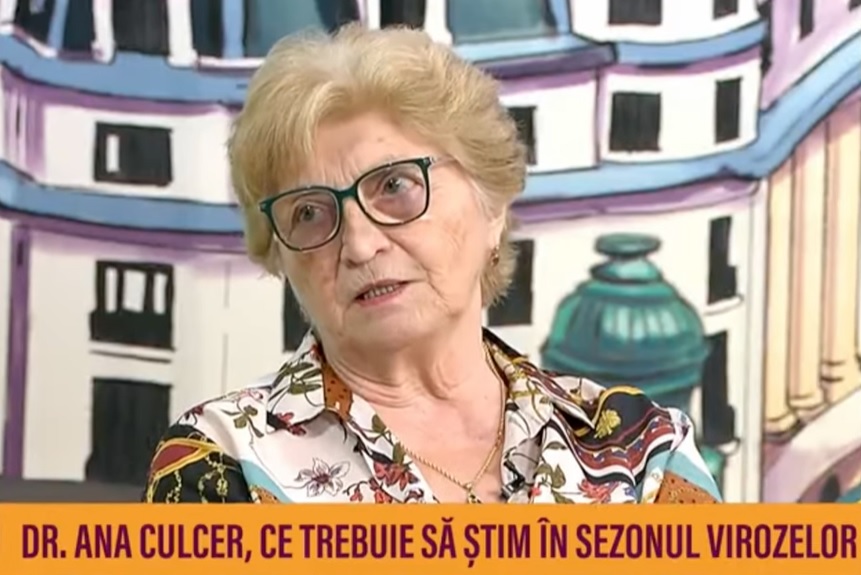
When we say Dr. Ana Culcer, we say the mother of all children in Romania. But that mother with the most solid pediatric medical knowledge. Because Dr. Ana Culcer has, perhaps, the most impressive professional and emotional CV of a baby and child doctor in our country. With a caring mother's behavior towards every child, but at the same time a responsible and dedicated doctor towards every parent, it is a real pleasure to absorb her advice. So this article is a more than relevant and useful result for parents, of the doctor's advice. We will discover together what we can do, as parents, to protect our children, but also the whole family from the wave of colds, viruses and flu that invades every cold season and to build an unwavering immunity.
Tip No. 1: Swimming
One of the most important pieces of advice Dr. Culcer has for us is that the best way to prevent seasonal illnesses and support immunity is to exercise. She says that swimming, which she also practices, is one of the physical activities that has such great complexity and efficiency that it will not only increase children's immunity and resistance to fighting respiratory diseases (8), but can even save lives and provide a normal and healthy course for premature babies.
"I send the kids to do sports. I had little kids weighing three hundred kilos, four hundred kilos, twins, I made them swim. And at 6 months they swim alone in the big pool and the father sits and supervises them from a distance. They gain a different resistance, and the muscle tone is different, they hold their heads better, they walk faster, they move faster, they are more resistant."
What actually happens when a premature baby does aquatic exercise?
When a baby floats in water, supported by its weightlessness, all the physical functions of its body that operate within specific limits on land, work much better in the aquatic environment. Breathing, the nervous system, muscles, bones, even digestion, everything works better. And for premature babies, who came into the world much too early and whose bodies are not ready for the challenges of the environment outside the mother's womb, swimming It thus becomes an essential therapy, thanks to the properties of water and aquatic exercises specially tailored for them by professionals.
At Acvatic Bebe Club, the lessons avatic education are therefore carefully designed for babies with special needs, who have delays in neurological, motor development or both. For us it is important not to accelerate their development, because that is not what we want. Rather, we want to provide the optimal conditions for a premature baby's body to develop healthily at its own pace, exposing it to physical situations that they cannot experience in any other environment than the aquatic one and thus giving them the chance to recover what their premature birth has stolen from them.(9)
A recent study (10), conducted in 2021 on 44 premature babies, with gestational ages between 32 and 34 weeks, even demonstrated that swimming can help them gain weight. And this can be observed from the second day of aquatic therapy. Babies in the premature group who benefited from the effects of hydrotherapy recorded a significant weight gain after only 5 days. Another study from 2010 (11) conducted with the help of 12 premature babies demonstrated that aquatic therapy improves their sleep. They had gestational ages of less than 36 weeks and were exposed to aquatic therapy for 10 minutes daily, through motor and postural stimulation, and their sleep behavior was also observed. At the end of the study, the babies went from restless sleep interrupted by bouts of crying, to a quiet sleep with deep breathing and much less frequent interruptions.
Tip No. 2: Health education
""Do you want me to be tough?" says Dr. Ana Culcer in an interview with Cătălin Măruță when he asks her why waves of viruses appear as the cold season approaches. And the speech continues, and Dr. Culcer emphasizes that the main cause is the lack of health education.You don't take a sick child to kindergarten, because you've contaminated the entire kindergarten. A sick child has no place in the community. What is the fault of my child or someone else's child who takes him healthy, keeps him at home, treats him, and then two days later he's sick again?"This is one of the rules that the doctor highlights as one of the most important. Here are other rules to follow, Dr. Culcer adds, if we want to avoid the wave of viruses:
Sanitary hygiene rules:
- We don't drink or eat after each other.
Respiratory illnesses, in particular, have been shown to be most easily transmitted through droplets of saliva, even microscopic ones. So they settle on glasses or dishes, on particles of liquids or food, and are then transmitted from one person to another extremely easily if people eat from the same plate, drink from the same glass, or eat using the same cutlery. (1)
- We disinfect toys, especially when the child is in a community with multiple children.
Numerous studies conducted in nurseries and kindergartens have proven the potential infectious danger of toys used by multiple children, but also the fact that regular disinfection of toys can reduce the presence of viruses and bacteria on the surface of toys, reducing their transmission from one child to another. (2)
- We ventilate the house very well, several times a day.
A poorly ventilated home leads to condensation and allows mold and other toxins, viruses and bacteria to grow, while also lowering our and our children’s immunity. Not only do we get sick more easily, being much more susceptible to contact with viruses from outside, but the environment in our home can cause respiratory infections, because we breathe in an environment full of such pathogens. That is why experts recommend, based on many studies, that we ventilate our homes, no matter how cold it is outside, at least once a day, for 15-20 minutes. (3)
- We don't wrap the baby in blankets and we don't keep the house at high temperatures.
Overheating is very dangerous. First, because the many layers of clothes we put on the child will increase the temperature and force the body to struggle to regulate its temperature, thus becoming more sensitive. But also because, raising the temperature with more clothes than it needs, it will sweat, the body will overheat, and when it reaches a normal environment and undresses there will be a large difference between the body temperature and that of the environment, which will again lead to sensitization and a decrease in immunity. Doctors recommend that we give the child a maximum of one extra layer of clothes compared to what we wear. Also, in the house, specialists recommend that in the cold season the temperature in the activity area (living room, dining room, kitchen, playroom) should not exceed 22-23 degrees, in the bathroom it should be 23-24 degrees when the child is bathing, and in the bedroom, when sleeping, the temperature can even drop to 18 degrees. The explanation for the optimal temperature for sleep is given by the fact that too high a temperature affects the quality of sleep, and restless sleep does not allow the body to recover, thus also leading to a decrease in immunity. (4)
Tip No. 3: Vaccination
The flu vaccine is pure prophylaxis against infection with the Influenza virus, the one responsible for the flu. Immediately after inoculation, like any vaccine, it activates the immune system to produce specific antibodies, those that will protect the body from contracting the flu virus or from developing a serious form of the disease. Doctors recommend that this vaccine be given in October or November, depending on the weather, because the body needs 2 weeks to produce antibodies. Thus, the child who will enter the community vaccinated, not only has a much lower chance of getting sick, but more importantly, the chances of taking the virus home become almost zero. (5)
"It's a time of viruses because most people don't even get vaccinated. I've been getting vaccinated against the flu for fifty years and everyone coughs in my nose and you see I'm still alive. And then a child gets infected at kindergarten, comes home and infects parents, grandparents and the whole family is sick. I've always had the vaccineUmcut for children from 7 months. Now there is also a nasal vaccine that is as effective as the injectable one and which is administered up to 18 years of age. The effects appear after 2-3 weeks, not immediately and it is done when the child does not have a cold.”, says Dr. Ana Culcer
Tip No. 4: Immune-boosting supplements and foods
Doctors tell us to make it a habit to increase our vitamin C and vitamin D intake as much as possible during the cold season, especially in children, as they are responsible for supporting the child's immunity and normal development. We can increase them both through dietary supplements, especially when it comes to vitamin D, and through a diet rich in fruits and vegetables full of vitamin C (6). Here's what Dr. Ana Culcer tells us:
"For immunity, vitamin C and vitamin D, all winter. And there are all kinds of solutions for immunity from plants. It is preferable to choose without chemicals and to choose according to the child's medical profile: if he is allergic, if he is anemic, if he has a very low immunity. There are also antiviral products that can be found in pharmacies, for the child who has transparent nasal secretions. If the secretions are yellow, green, purulent, then there is definitely an over-added bacteria and an antibiotic is given. But only after we confirm with a test. All fruits are good for immunity, especially the Romanian ones, which are more natural, without chemicals, which can be seen to be bitten by something, beetles, ants. Because they don't put chemicals in the fruit. Choose smaller vegetables and fruits, because they are less sprayed."
Tip No. 5: Nutrition
Dr. Culcer also issues a warning to parents: immunity is also closely linked to the child's physical condition, and obesity is the one that most dramatically influences immunity.(7)
"It's a big problem.obesity in Romania. When I see a child come in the door, I ask how long they have been breastfed. You can see from a distance a child who has been artificially fed from a child who has only eaten breast milk. Because immunity is completely different, the risk of obesity is much higher. There are exceptions for those who are breastfed, if afterwards you stuff them with cereals, with flour. I met a 13-year-old child weighing 130 kilograms, an 11-year-old girl weighing 110 kilograms. They are given cereals with powdered milk for years. What do you fatten a pig with? All with cereals. So we have to be very careful about the diet. Or parents ask children why they eat sweets? And I tell them who makes the food policy in the family? The child has no salary, he eats what he sees his parents eating or what is bought for him.”
Therefore, whether we are talking about immunity, physical resistance, our need, as parents, to give our children the chance to develop healthily, swimming is the solution. As Dr. Culcer states, through aquatic education, little ones "are more resilient" and gain the physical tone they need for a healthy and cheerful childhood.
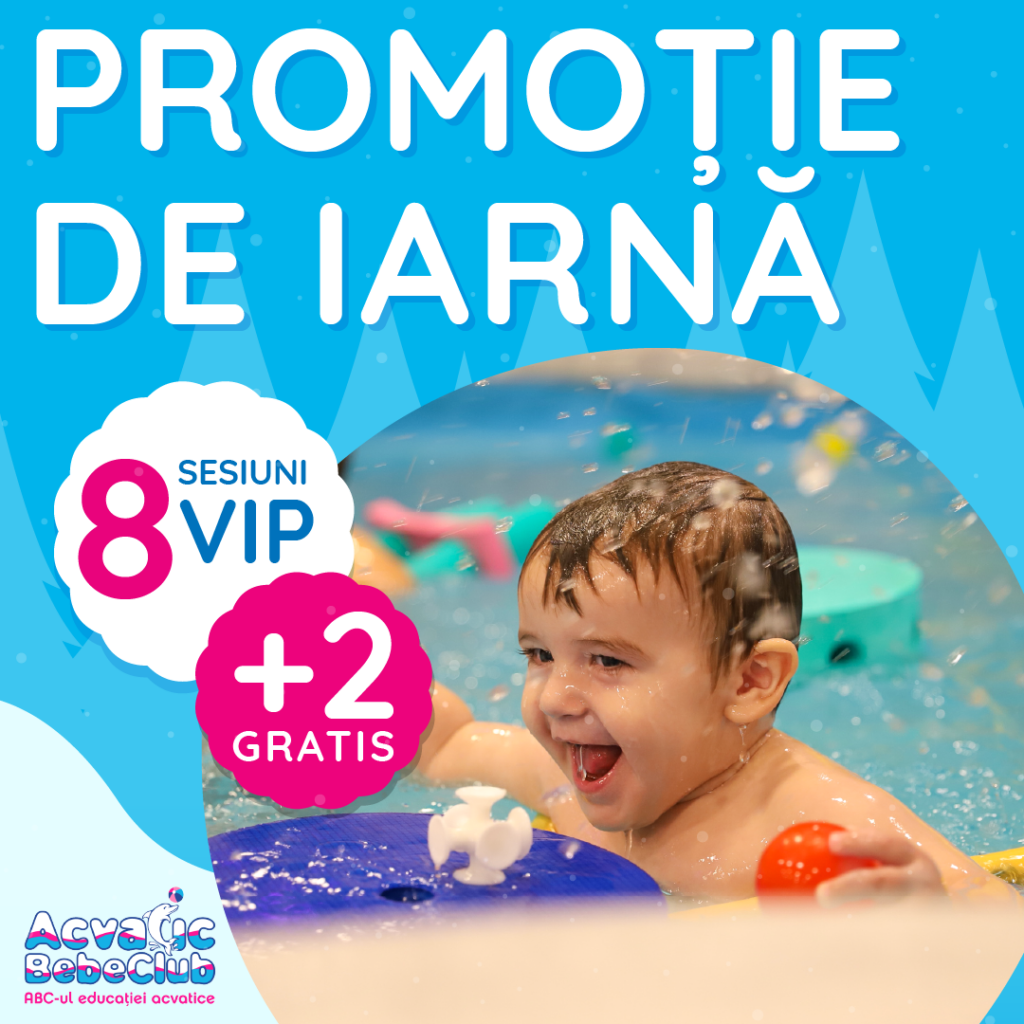
Our only VIP Subscription with 10 aquatic education sessions can be purchased only until February 8, 2025 in a super offer: you pay for 8 VIP sessions and get 2 more FREE.
Grab the unmissable Baby Swim Deal that brings you all the VIP advantages at Acvatic Bebe Club and your baby a strong immune system all seasons.
*The promotion is dedicated to children aged 2 months - 4 years.
Bibliography
(1)
Transfer of microorganisms and respiratory viruses through food, Paul Dawson,
Clemson University
https://esmed.org/MRA/mra/article/view/2105
(2)
-Effect of cleaning and disinfection of toys on infectious diseases and micro-organisms in daycare nurseries, T.Ibfel, E.Hengelund, A.C.Schultz, LP Andersen – Departments of Infection Control 6901 and Clinical Microbiology 9301, Copenhagen University Hospital (Rigshospitalet), Denmark, National Food Institute, DTU FOOD, Division of Food Microbiology, Søborg, Denmark
https://www.sciencedirect.com/science/article/pii/S0195670114003429
Impact of an infection control program in a specialized preschool, Leonard R. Krilov MD, Stephen R. Barone MD, Francine S. Mandel PhD, Timothy M. Cusack MS, Donna J. Gaber BA, MT, Joseph R. Rubino MA – Department of Pediatrics, North Shore University Hospital Cornell University Medical College, Manhasset, NY, USA, Department of Research, Division of Biostatistics, North Shore University Hospital Cornell University Medical College, Manhasset, NY, USA, Reckitt and Colman, Inc., Montvale, NJ, USA
https://www.sciencedirect.com/science/article/pii/S0196655396900085
(3)
– WHO guidelines for indoor air quality: selected pollutants – https://apps.who.int/iris/handle/10665/260127
– Indoor air quality and health, A.P.Jones, School of Environmental Sciences, University of East Anglia, Norwich, Norfolk, NR4 7TJ, UK
https://www.sciencedirect.com/science/article/abs/pii/S1352231099002721
(4)
- Evaluation of the thermal insulation of clothing of infants sleeping outdoors in Northern winterr, Marjo Tourula, Takako Fukazawa, Arja Isola, Juhani Hassi, Yutaka Tochihara & Hannu Rintamäki, European Journal of Applied Physiology volume – https://link.springer.com/article/10.1007/s00421-010-1686-1
- Thermal environment and sleep quality: A review, L.Lan, K.Tsuzuki, YFLiu, ZWLian – Department of Architecture, School of Naval Architecture, Ocean & Civil Engineering, Shanghai Jiao Tong University, Shanghai 200240, China, Department of Architecture & Civil Engineering, Graduate School of Engineering, Toyohashi University of Technology, Toyohashi 441-8580, Japan, School of Environmental and Municipal Engineering, Xi'an University of Architecture and Technology, Xi'an, Shaanxi 710055, China – https://www.sciencedirect.com/science/article/abs/pii/S0378778817317681
(5)
– Effectiveness of Trivalent Flu Vaccine in Healthy Young Children, Christopher C. Blyth, MBBS; Peter Jacoby, MSc; Paul V. Effler, MD; Heath Kelly, MPH; David W. Smith, MBBS;
Christine Robins; Gabriela A. Willis, MBBS; Avram Levy, PhD; Anthony D. Keil, MBBS; Peter C. Richmond, MBBS on behalf of the WAIVE Study Team
- Effects of Prior Season Vaccination on Current Season Vaccine Effectiveness in the United States Flu Vaccine Effectiveness Network, 2012–2013 Through 2017–2018 , Sara S Kim, Brendan Flannery, Ivo M Foppa, Jessie R Chung, Mary Patricia Nowalk, Richard K Zimmerman, Manjusha Gaglani, Arnold S Monto, Emily T Martin, Edward A Belongia, Huong Q McLean, Michael L Jackson, Lisa A Jackson, Manish Patel Clinical Infectious Diseases, Volume 73, Issue 3, 1 August 2021, Pages 497–505, https://doi.org/10.1093/cid/ciaa706
(6)
- Vitamin C and Immune Function, Anitra C. Carr 1,*ORCID, Silvia Maggini, Department of Pathology, University of Otago, Christchurch, PO Box 4345, Christchurch 8140, New Zealand, Bayer Consumer Care Ltd., Peter-Merian-Strasse 84, 4002 Basel, Switzerland
https://doi.org/10.3390/nu9111211
- Vitamin D and Immune Function, Barbara Prietl, Gerlies Treiber, Thomas R. Pieber, Karin Amrein, Division of Endocrinology and Metabolism, Department of Internal Medicine, Medical University of Graz, Auenbruggerplatz 15, A 8036 Graz, Austria
https://doi.org/10.3390/nu5072502
(7)
- Association of Childhood Obesity and the Immune System: A Systematic Review of Reviews, Roya Kelishadi, Mohammad Roufarshbaf, Sina Soheili, Farzaneh Payghambarzadeh, and Mohsen Masjedi https://doi.org/10.1089/chi.2016.0176a
- Childhood obesity: immune response and nutritional approaches, Thea Magrone, Emilio Jirillo, Department of Basic Medical Sciences, Neuroscience and Sensory Organs, University of Bari, Italy: https://www.frontiersin.org/articles/10.3389/fimmu.2015.00076/full
(8)
The Effect of Swimming in Asthmatic Children—Participants in a Swimming Program in the City of Baltimore, Shih-Wen Huang, Roseanne Veiga, Ulgan Sila, Earlene Reed & Susan Hines – https://doi.org/10.3109/02770908909073240
(9)
Infant Neuro Aquatics: Good for babies, good for parents, Dr. Hagit Friedman Department of Nursing, Faculty of Social Welfare and Health Sciences University of Haifa
https://www.scientia.global/wp-content/uploads/2015/11/hagit-friedman-cover.pdf
(10)
Effects of hydrotherapy and tactile-kinesthetic stimulation on weight gain of preterm infants admitted in the Neonatal Intensive Care Unit, Franciane R. dos Anjos, Adriane M. Nakato, Paula Karina Hembecker, Percy Nohama, Ana Lúcia F. Sarquisa, Universidad de Federal do Paraná (UFPR), Hospital de Clínicas (HC), Departamento de Pediatria, Curitiba, PR, Brazil, Hospital do Rocio, Serviços Neonatais, Campo Largo, PR, Brazil Universidade Tecnológica Federal do Paraná, Programa de Pós-Graduação em Engenharia Biomédica, Curitiba, PR, Brazil
https://www.sciencedirect.com/science/article/pii/S0021755721000887?via%3Dihub
(11)
Effect of aquatic physical therapy on pain and state of sleep and wakefulness among stable preterm newborns in neonatal intensive care units, Carine Moraes Vignochi 1, Patrícia P Teixeira, Silvana S Nader, Departamento de Fisioterapia, Universidade Luterana do Brasil
https://pubmed.ncbi.nlm.nih.gov/20730365/