The benefits of swimming for babies in the first year of life
Swimming is recommended for leisure, as a physical activity or simply to improve the quality of life. In general, aquatic activities are also indicated as support in the relief of joint disorders, lumbar pain and various traumas. Thanks to the support provided by water, there is an extensive use in physiotherapy, for movement re-education, postural correction and treatment of various pathologies.
According to people of all ages, swimming is a complete sport, as it allows exercising muscles, motor coordination, circulatory and respiratory systems. In addition, this type of activity contributes to the development of independence and self-confidence in the child, by developing the skills to react and function in a different environment from the usual one.
If you are interested in a perfectly healthy activity through which your child can grow harmoniously, the following lines will be helpful.
Physical development
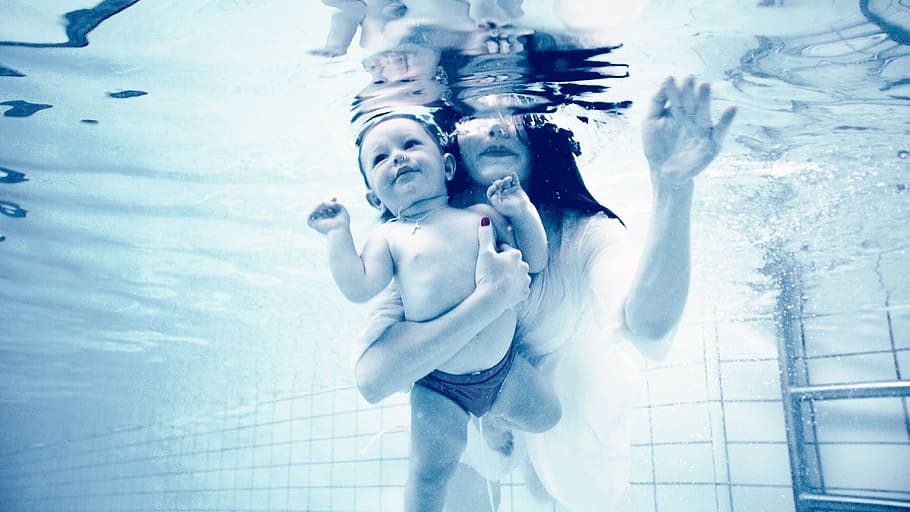
Before being born, your baby was surrounded by amniotic fluid for almost nine months. So water is an environment he already knows – swimming will help him get back in touch with his old “natural habitat.”
- Swimming for babies improves coordination, balance and spatial awareness.
- It has excellent benefits for cardiovascular fitness exercises and improves the body's resistance, both to effort and to potential illnesses.
- Increases muscle strength through exercise, encouraging the early development of psychomotor skills.
- Gentle exercises, combined with water at a comfortable temperature, relax the child and stimulate the appetite, helping him eat and sleep better.
- Expands the capacity of the child's respiratory system by improving blood flow.
- Supports the height growth of the little one.
Psychological development
A child feels safer and enjoys learning to swim when they feel that their parents are paying attention to them. Of course, depending on the temperament of the little one, it may be more or less difficult to get them into the water, but it is important to take them “with a grain of salt”. The company of the whole family – whether both parents are present, or an older brother or sister – undoubtedly helps in this regard.
Another important aspect: in the water the child can move independently and freely, without fear of falling. This will help the little one become more confident and improve their self-esteem.
- It increases the feeling of independence and self-confidence – even if the baby doesn't know how to walk yet, sustained movement in the water stimulates intelligence, through locomotor and sensory activity.
- The child learns to swim in a fun and healthy way – the knowledge acquired this way will be an asset later in life.
- It boosts self-confidence and improves communication with others.
Increasing social skills
Water is a reliable friend of mothers: swimming is, in fact, among the aerobic activities recommended for pregnant and breastfeeding women. In addition, new mothers can attend aquatic classes with their babies, which give excellent results in young children, improving their reflexes and coordination of movements.
From a social point of view, swimming has several advantages:
- It helps the child begin socializing without trauma with other children.
- Broaden the horizons of shared activities and games.
- Understanding the need to share activities with other people.
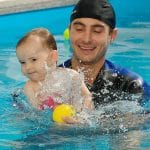
- Strengthens bonds of affection with the family – swimming exercises usually take place in the arms of parents, so the feeling of trust and the child-parent relationship develop naturally.
- The child begins to understand and acquire the fundamental ability to take care of himself, through the desire to move independently in the water.
Swimming is, after all, the first sustained physical activity that underlies the growth of the human being, as we have all practiced it since the moment of birth. After the moment of birth, the benefits are multiple and visible from a very young age: swimming improves cardio-respiratory capacity, has postural benefits in terms of muscle alignment and coordination, and develops sensory and psychomotor skills.
In addition, this activity works as an anti-stress remedy, as it relieves tension in the body and promotes good mood by stimulating the production of endorphins, i.e. the hormones responsible for happiness. This psychophysical well-being promotes a better quality of sleep. Swimming also improves the respiratory activity of people suffering from asthma, promoting coordination of the respiratory muscles, to maintain regular breathing during any type of activity.
In conclusion, regardless of whether you have cases of pathologies in the family or a flawless heredity, swimming remains the most suitable sport for your baby. Respecting, of course, the indications of the neonatologist and the specialists of the swimming club you want to attend, the child will benefit from the supervision of adults interested in his well-being. In addition to all this, the demanding psychomotor activity in the aquatic environment will support the little one to develop harmoniously and acquire the immunity and self-confidence that will support him in adult life.