ABC method: 3 steps to a successful aquatic education session
Our specialists, through their professional training and empathy towards children, stimulate the curiosity and creativity of the little ones through a personalized work plan, constantly adapted to each child's developmental pace. The plan for each aquatic session follows a clear, three-part structure, with an emphasis on simple activities, carefully designed by a team of psychologists. These activities have play as their central element for gentle stimulation and effective communication with the little ones.
Through play, the child learns movements, imitates what he sees around him, and it is also through play that the atmosphere of relaxation, trust, and safety that he needs to begin the learning process is created.
Our specialists are in constant communication with parents regarding personal goals and expectations, teaching methods, and each child's personality.
If we want to offer experiences for the little ones, for parents we want to offer the necessary support so they can relax and enjoy the child's achievements alongside them.
As part of the ABC method, developed by a team of doctors, psychologists, and aquatic education specialists, each aquatic education session is generally structured into three parts, with their content varying depending on the child's age and availability.
1. Step-by-step accommodation
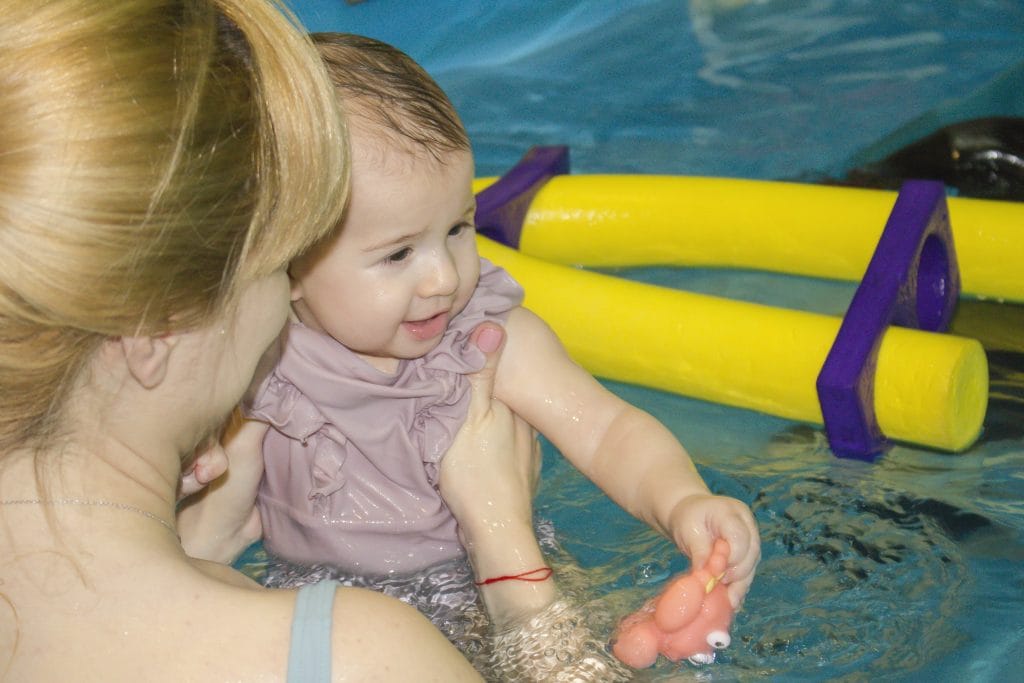
Acclimatization and getting used to the water are very important for any child to feel comfortable in the water with their aquatic specialist. Therefore, in the first part of the session, getting accustomed to the water is always recommended, regardless of the child's age, in the confined space at the edge of the pool. This way, the child gets used to the pool environment and prepares their body for exertion. Once this important stage, which many overlook, is completed, the child is ready to begin the structured activities within the aquatic session.
2. Exercises according to age and development
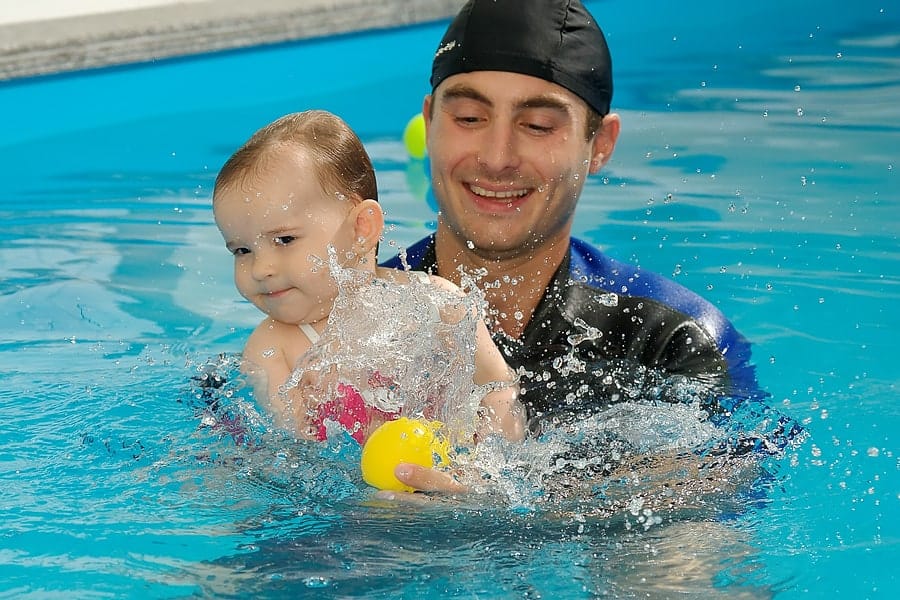
An aquatic education session can include various activities, depending on the child's developmental level, their availability, and, last but not least, the goals set by the aquatic specialist. For babies, movement in the water is achieved exclusively with the specialist's assistance, using support holds that do not restrict their movements.
At Acvatic Bebe Club, we use quality, internationally approved materials that are a real help in mastering skills:
- Perforated mat – for positioning, creating an intimate play space, transitions from one position to another, balance training, and encouraging land movement.
- floating stick with key – to stimulate movements of the lower and upper limbs and stimulate the vertical position in the aquatic environment, which will prepare the adoption of the vertical position on land and voluntary walking
- toys of different sizes, colors and with different functions – to initiate play and capture attention, which stimulates the grasping reflex.
Between 1 month and 1 year, the diving reflex is stimulated by learning a specific breathing technique for the aquatic environment. In other words, the baby learns to hold their breath underwater.
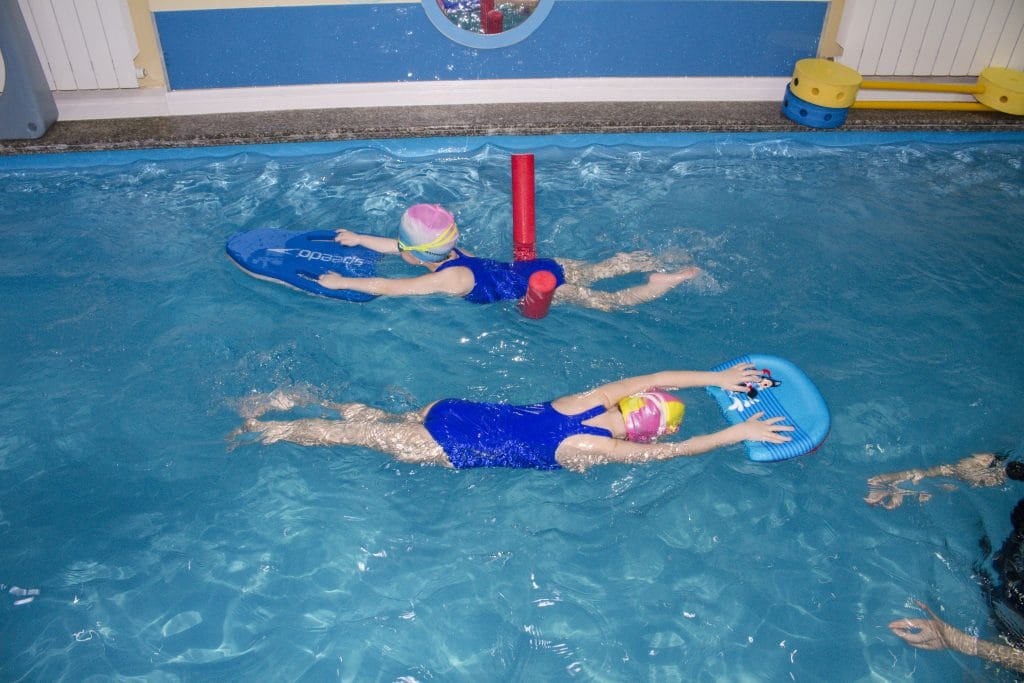
After this period, we will continue to enrich the motor and informational repertoire by approaching more complex and diverse exercises, with the aim of stimulating coordination movements specific to aquatic activity. These exercises are followed by short-distance travel, both on the surface and underwater, with the help of floating objects (ring, perforated mat, etc.).
After the age of 2.5 years, the first notions of swimming preparation appear. The child is positioned horizontally on the water and learns to coordinate leg movements with breathing specific to the aquatic environment, respectively coordinating arm and leg movements when submerging.
3. Recovery of the body after exercise
The baby or toddler's aquatic education session always ends with a period of physical recovery after exertion. This aims to regulate functional parameters (respiratory and heart rate) to resting values. This is also achieved through exercises – passive or active – to prevent fatigue from setting in at the end of the session.
Newborns are in a race against time, as they need to gain mobility before they gain too much weight. Aquatic education offers the perfect opportunity to achieve this. It is also the only sports activity that can be practiced from the first month of life, provided it is carried out with qualified aquatic specialists and specific teaching materials.
Safety first
The first ABC club was established in 2012, and today we offer 3 aquatic clubs for 3 different age groups: Acvatic Bebe Club Dorobanți, for children between 1 month and 4 years old; Acvatic Bebe Club Primăverii, for children between 2 months and 4 years old; and Acvatic Bebe Club Decebal, for children between 4 months and 6 years old. The clubs have a gradual acclimatization area and a waiting room where parents and grandparents can watch the children's aquatic sessions.
These are the only specialized clubs in Bucharest where water treatment and disinfection are carried out by a mixed UV and ozone system. Through the ventilation and dehumidification system, an ideal microclimate is permanently maintained for aquatic education sessions.
The ABC Decebal Aquatic Education Club has a dedicated, full-time medical staff who can provide assistance or counseling if needed, upon parental request. Furthermore, ABC specialists participate in annual first-aid and advanced training courses to ensure that the services offered meet the highest quality standards.